How Jeff Bezos stacks up against Richard Branson and Elon Musk in the race to dominate space

Two of the world’s richest men have blasted into space in a bid to promote commercial passenger space trips for wealthy tourists.
On Tuesday, Amazon and Blue Origin founder Jeff Bezos launched into space on the New Shepard spacecraft.
Last week, Virgin Galactic’s Richard Branson rocketed into space on his own aircraft.
Both competing billionaires travelled to suborbital space – the rough mark where the Earth’s atmosphere ends – for about five minutes.
So why are some experts saying only one of them actually made it?
It all comes down to where you think space begins.
First, let’s compare the two journeys.
Jeff Bezos: Blue Origin
Bezos and his three crew mates lifted off from a launch site in Texas inside a capsule mounted on top of a rocket.
The spacecraft travelled three times the speed of sound.
After eight minutes of travel, when it reached an altitude of about 72 kilometres, the booster’s main engine shut down and the capsule was released to fly on its own.
The group reached an altitude of more than 100 kilometres above the Earth, where they were able to enjoy three minutes of weightlessness like the astronauts in space movies.
Three parachutes on the Blue Origin crew capsule deployed, slowing it down for landing as it descended back to Earth.
The flight lasted about 10 minutes.
Putting his marketing skills to good use, Bezos planned the journey to appear symbolic.
Blue Origin’s New Shepard booster vehicle, which carried the capsule, was named after Alan Shepard, the first person from the US to travel to space in 1961.
The timing was significant, too.
Bezos deliberately timed the journey into space to occur on July 20, the 52nd anniversary of the Apollo 11 moon landing.
Richard Branson: Virgin Galactic
Branson, two pilots and three other crew members lifted away on the VSS Unity space plane from a launch site in New Mexico on July 11.
Similar to Blue Origin’s capsule method, Virgin Galactic’s space plane was air launched, meaning another aircraft carried it about 13,700 metres (45,000 feet) and then released it.
A rocket engine then ignited and carried the plane to space.
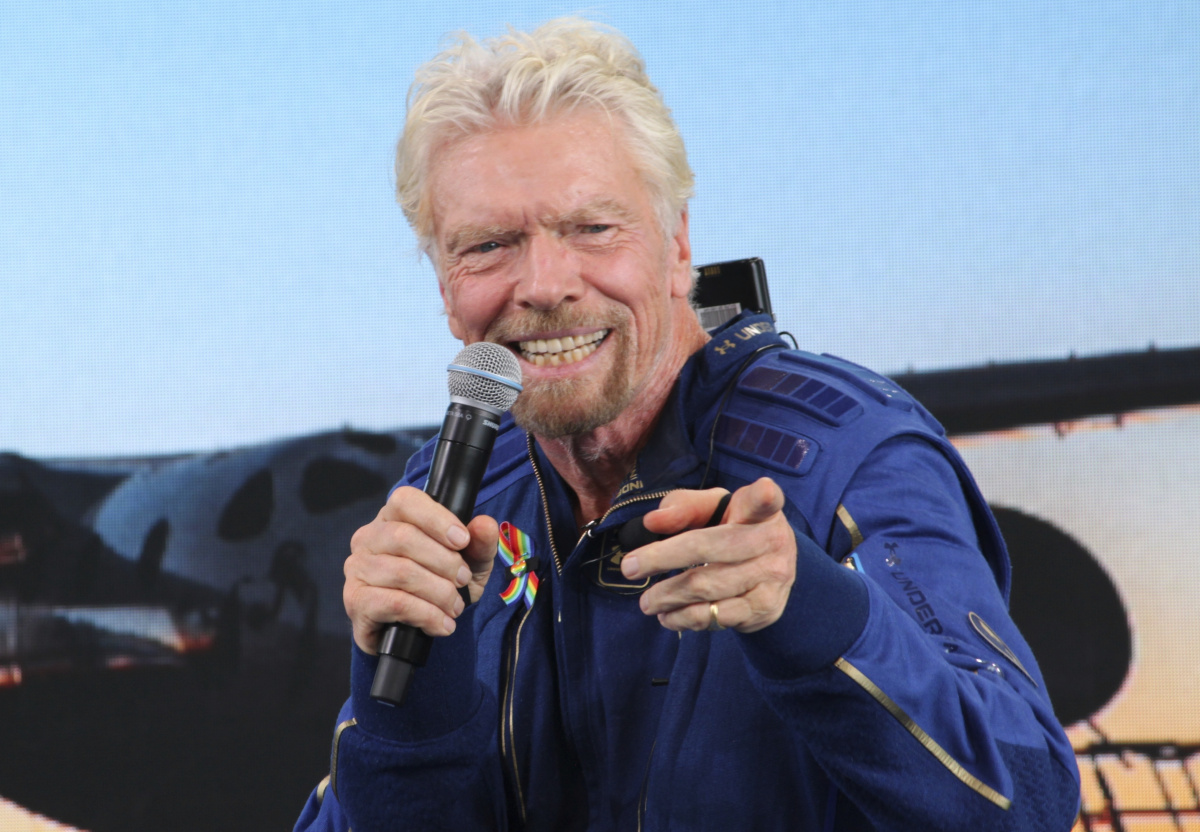
Richard Branson was visibly thrilled with the space ride. Photo: AAP
Unlike Bezos’ capsule, the rocket engine didn’t fall away. It turned off, but stayed with the space plane.
The crucial difference
Some critics have argued Branson didn’t make it all the way to space according to international standards.
The world governing body for aeronautic and astronautic records, the Fédération Aéronautique Internationale (FAI), uses the Kármán Line as a way of determining when space flight has been achieved.
It’s basically an imaginary boundary 100 kilometres above mean sea level.
Once this line is crossed, the atmosphere becomes too thin to provide enough lift for conventional aircraft to maintain flight.
However, the US military and NASA define space differently.
According to them, space starts 19 kilometres below the Kármán Line, at 80 kilometres above the Earth’s surface.
Pilots, mission specialists and civilians who cross this boundary are officially deemed astronauts.
The Virgin Galactic spaceplane flew to a top of 86 kilometres – well above the US’s recognised space boundary – but it fell short of the FAI’s Kármán Line definition.
Associate Professor Alice Gorman, a space exploration expert at Adelaide’s Flinders University, told The New Daily this grey area could have significant implications about what it means to be considered an ‘astronaut’.
“Obviously, if (Bezos and Branson) are going to be taking paying passengers to space, part of the kudos and thrill of it is getting to be called an ‘astronaut’,” Dr Gorman said.
“If this becomes more frequent, and more people go to space, this will change that elite group of people.
“Theoretically, we could have hundreds of people who have technically gone to space. This will affect its cultural currency, and that’s going to be interesting to see.”
Elon Musk: SpaceX
It wouldn’t be a story about eccentric billionaires travelling to space without Elon Musk.
Like Blue Origin, Musk’s SpaceX uses capsules atop rockets instead of an air-launched reusable space plane like Virgin Galactic.
SpaceX, which has already been launching astronauts to the NASA space station and building Moon and Mars ships, plans to take tourists on more than just short, up-and-down trips.
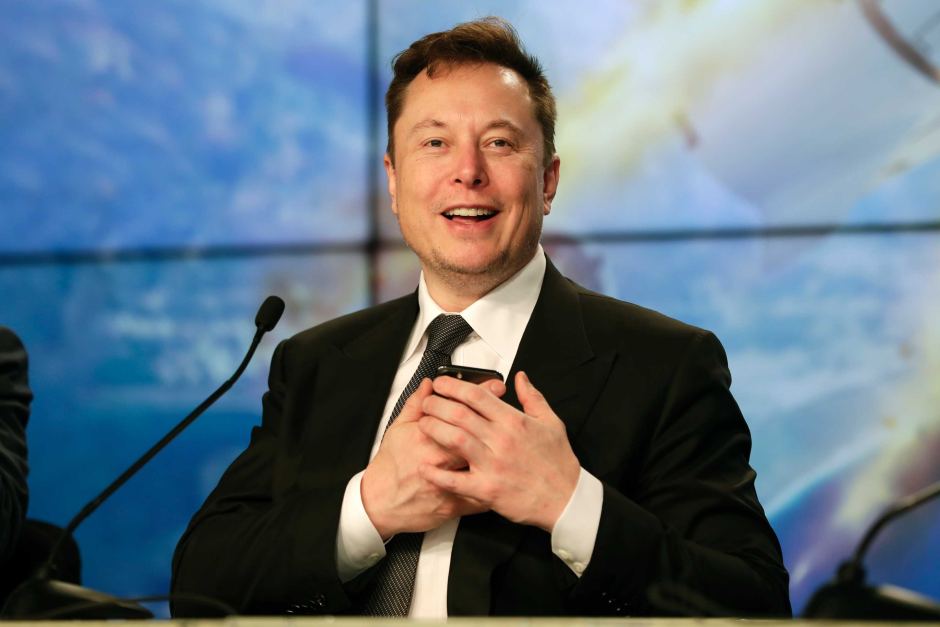
Elon Musk watched a number of successful SpaceX launches last year. Photo: AP
Customers will instead go into orbit around the Earth for days, with seats costing well into the millions.
The company’s first private flight is set for September.
Meanwhile, Blue Origin plans to launch two more passenger flights before the end of the year, but ticket prices have not been revealed.
Want to see more stories from The New Daily in your Google search results?
- Click here to set The New Daily as a preferred source.
- Tick the box next to "The New Daily". That's it.


